
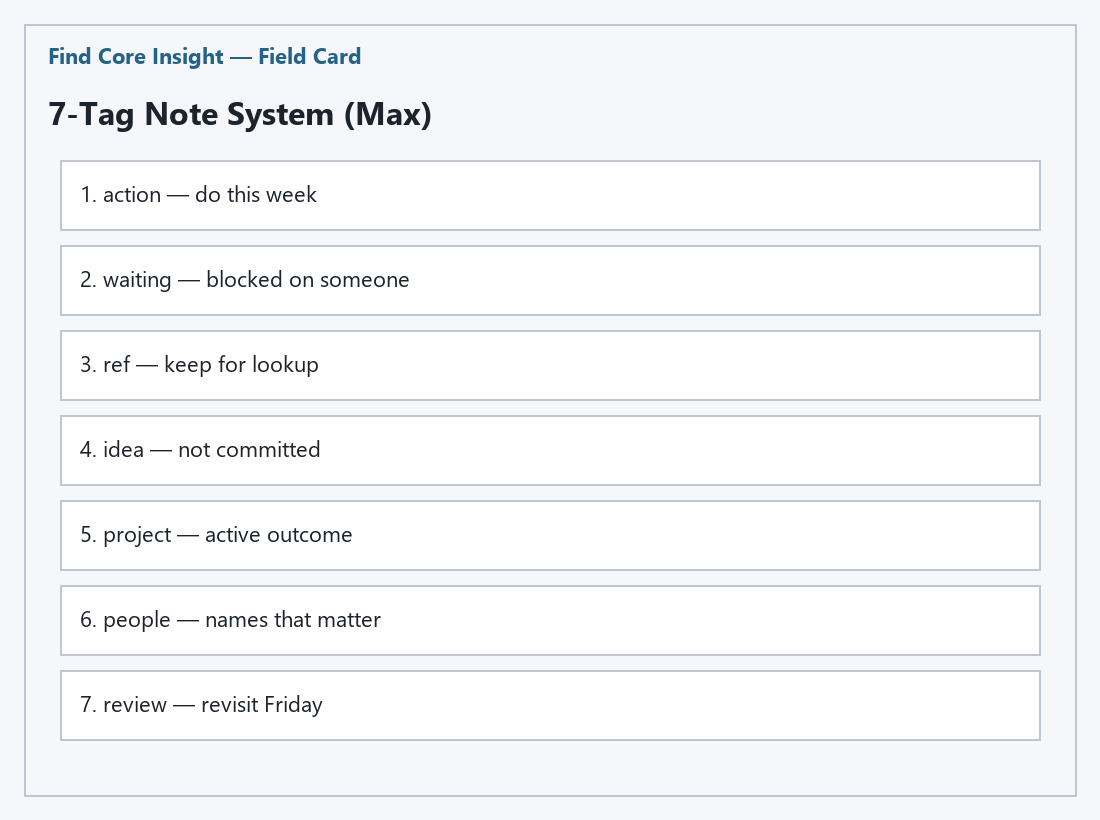
A 7-Tag Note System That Stops Tag Sprawl. Unlimited tags recreate folder chaos. Cap yourself at seven and make every note earn one.
The seven tags — checklist
Every note wears exactly one of these tags. If two seem to fit, split the note.
- action — a next physical step lives here or is linked
- waiting — blocked on a named person; include their name in the title
- ref — evergreen truth, no deadline
- idea — not yet work; no hidden project scope
- project — outcome with a finish line and owner
- people — relationship context, preferences, history
- review — temporary holding tag for weekly pruning only
If you cannot explain a tag in one sentence, it does not belong in the seven.
Print the checklist on one card taped to your monitor for two weeks. Muscle memory beats opening a wiki.
Commentary: why seven is a ceiling, not a starter set
Teams add an eighth tag within a month—usually readlater or someday—and recreate inbox sprawl with prettier labels. Seven forces a decision at capture: is this work, truth, or a person? Undecided notes get review for Friday, not a new tag.
Jon kept twelve tags in Bear for two years. Search returned duplicates: the same API doc tagged ref, project, and readlater. After collapsing to seven, search noise dropped because each note had one job. He did not become more disciplined; the ceiling removed a decision he was bad at making repeatedly.
Commentary: one tag per note, even when it hurts
A note titled Launch checklist + pricing FAQ wants three tags. Split it: project note for launch tasks, ref note for pricing FAQ. Chimera notes are why full-text search feels broken even in expensive apps.
Link project → ref. Do not tag both on one blob. Most notes should wear one tag. When you want three, you have not decided what the note is.
Commentary: monthly tag audit (fifteen minutes)
First Friday of the month: list tags with fewer than three notes. Merge or delete. If action holds eighty notes, the problem is not taxonomy—it is tasks living in notes instead of a task list. Move verbs out; keep notes for context.
Measurable signal: count notes tagged review at end of Friday prune. Target under ten. Double digits means capture is too loose or weekly prune is skipped.
Map legacy tags in one sitting. Make a conversion table: old → one of seven or delete. Nostalgic labels like misc2019 are how sprawl returns through the side door.
Commentary: when ideas become projects the same day
When an idea becomes work the same day, retag project and add a next action immediately. Leaving active work under idea is how commitments go invisible. The seven-tag system is a decision discipline disguised as taxonomy.
Waiting notes without a name in the title fail the tag. Blocked on legal is not waiting; blocked on Maria in Legal is.
Commentary: people tag without gossip
people notes hold working context: Prefers async written feedback before calls; timezone US Central. Not venting, not performance reviews. If it cannot be pasted professionally, it does not belong in a shared vault.
Ref notes answer questions you will ask again in six months. Project notes should shrink as the outcome nears. Tags are status and type, not a second project manager.
Example people note for a vendor contact: Responds fastest to bullet lists before 2pm ET; escalate through ticket portal, not phone. That note prevents a wasted afternoon—not because it is clever, because it is findable under people + name.
Field example: how Jon collapsed twelve tags in one afternoon
Jon exported all tags and note counts. Anything under three notes merged or died. readlater became either ref or delete—no middle. project-backburner became project with a review date or idea. After hiding legacy tags, he ran search for three terms he uses weekly. Noise dropped because chimera notes had been split.
Jon did not migrate historical perfection. Open work migrated; archives stayed messy on purpose. Perfect taxonomy on closed work is archaeology, not operations.
After thirty days, Jon’s weekly search for API and vendor terms returned one note per hit instead of four. That clarity is the ROI—not prettier tags.
Commentary: the waiting tag as a named-person contract
A waiting note without a name is a guilt bookmark. Write Waiting on Maria — Legal redlines on MSA, not waiting for approval. Include the date you asked and the channel. When Maria replies, the note converts to ref or deletes— it does not linger as waiting forever.
Jon reviewed waiting notes every Friday: anything older than ten business days gets a nudge task or a delete if the work died. Waiting is temporary status, not a storage class.
Measurable signal: count waiting notes at Friday end. Target single digits. Double digits means you are using waiting to avoid asking again.
Example nudge task: Ping Maria re MSA redlines — waiting since 4/01. The waiting note closes when the task completes.
idea tag — parking lot with an expiry
Ideas without expiry become guilt shelves. Jon tags sparks as idea and adds review by date in the title: Micro-SaaS for invoice parsing — review by 5/15. Friday prune converts to project with a next action, extends review date, or deletes.
Ideas that survive three review dates without action usually were not ideas—they were mood. Delete without mourning.
Measurable signal: idea count tagged with past review dates. Target zero entering the weekend. Past dates mean prune skipped or capture lying about intent.
Tags are status, not a second project manager
When you feel the urge to add an eighth tag, add a task instead. Tags answer what kind of thing is this? Tasks answer what happens next? Blurring the two creates a system that looks organized and behaves like a pile.
Give the seven tags thirty days before judging them. Rename nothing mid-week; boredom with taxonomy usually means you need stricter capture, not more labels.
Eighth tags are almost always a task list in disguise. Build the task list instead.
Taxonomy debates feel like progress. Tag ceilings force capture decisions—that is the actual progress.