The first glance at the lock screen is not a message you needed; it is just the habit that ends the block. Most people lose significant chunks of focused work per block to accidental phone checks that spiral into scrolling, app hopping, and unplanned replies to low-priority messages. This printable, pocket-sized card sets clear boundaries for when your phone stays in another room during a single 45-minute focus block, removing the need to negotiate with yourself mid-task when willpower is low. We built this framework for independent knowledge workers and students, with guidance tested at Find Core Insight to minimize unnecessary decision fatigue during high-stakes work periods.
Pocket checks that reset a 45-minute block
These quick pre-block checks are done while the card is in your pocket, before you walk your phone to its designated spot in another room (a kitchen counter, bedroom drawer, or entryway table works best, out of earshot for non-emergency alerts). The four checks are non-negotiable, and take almost no time to complete: 1. Turn on Do Not Disturb for all non-emergency contacts, and confirm your custom emergency bypass list is active for any high-priority contacts you have pre-selected. 2. Set a timer for the end of the focus block that will chime on your laptop or desktop speaker, so you do not rely on your phone to alert you when the block is over. 3. Jot any pending call, text, or errand you need to handle post-block on the back of the card, so you don’t fixate on remembering it mid-work and create an excuse to grab your phone early. 4. Confirm you have all reference materials, chargers for your work device, water, and any snacks you might need within arm’s reach, so you have no practical reason to leave your desk mid-block. Example timing: These checks take 90 seconds total, no longer, so you don’t delay starting your work or waste energy on prep that cuts into your focus window.
Room-away rules and when you may retrieve the phone
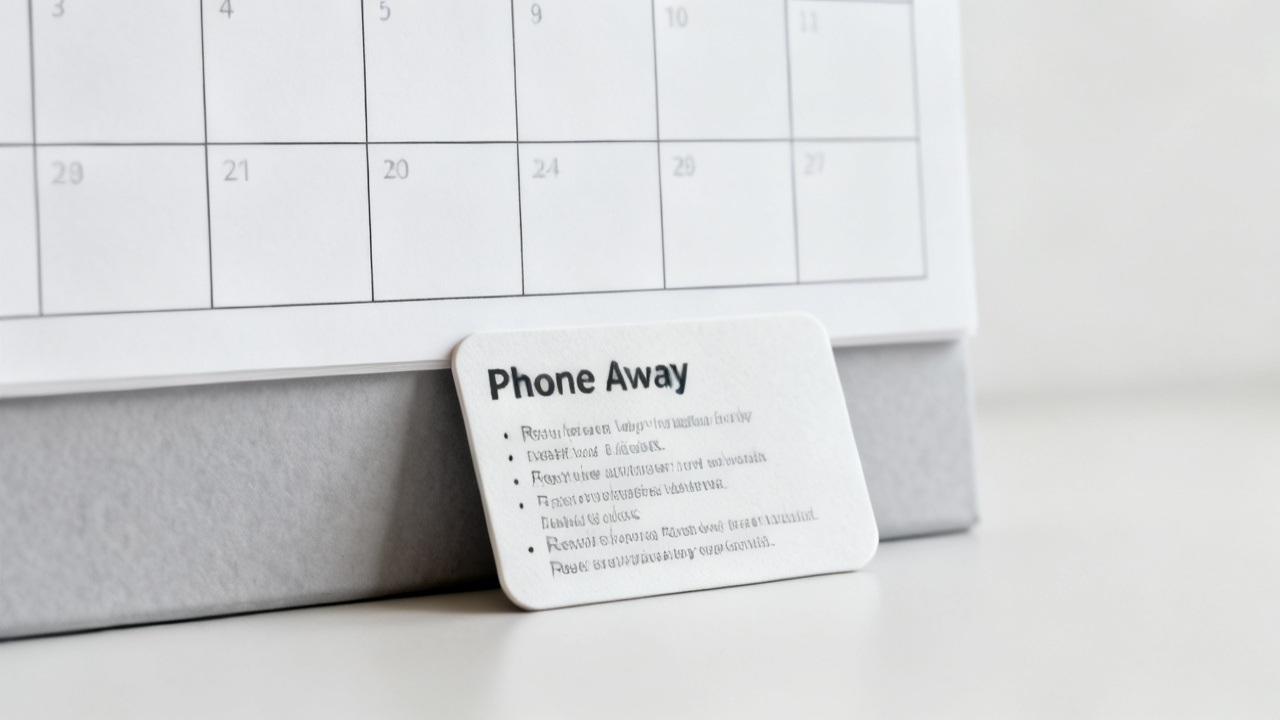
The front of the 3×5 inch pocket card includes these non-negotiable retrieval rules, printed large enough to read from your desk if you prop the card against your laptop while you work. You can customize the wording slightly to fit your needs, but the core rules remain consistent to avoid mid-block bargaining:
| Scenario | Allowed to retrieve phone? | Next step before retrieval |
|---|---|---|
| 45-minute block timer goes off on your laptop | Yes | Save all open work first, then retrieve the phone for a 5-minute break |
| You remember a task you need to log on your phone task app | No | Write the task on the back of the card, return to work |
| You hear a loud, repeated chime you have pre-set only for emergency contacts | Yes | Pause your work timer, retrieve the phone only to respond to the emergency |
| You are finished with your primary task for the block with 10+ minutes remaining | No | Use the remaining time to outline your next focus block, or organize work files |
| You feel bored, stuck, or distracted mid-task | No | Stretch in your seat for 30 seconds, then re-read the last paragraph you wrote/edited to re-engage |
If you keep a digital version of the card on your laptop desktop, you can pin it to the corner of your screen so it is visible at all times during the block. The rules are designed to remove ambiguity: if your scenario is not listed as an allowed retrieval case, you stay at your desk and use the outlined alternate action. This eliminates the mental back-and-forth of “should I get my phone?” that often pulls you out of deep work even if you don’t end up checking the device.
Exceptions that sneak the phone back to the desk
Most failed phone-away blocks happen because people create last-minute exceptions that let them bring the phone back to their desk, often without realizing they are undermining their own focus. The most common of these loopholes include the belief that you need your phone to play focus music: pre-download your focus playlist to your laptop or a standalone speaker before your block starts, so you don’t need to keep your phone nearby to control audio. Another common loophole is expecting a non-urgent work call or client check-in: set up call forwarding to your laptop’s VOIP line 2 minutes before the block starts, so you can take the call without touching your phone, and route all non-urgent messages to your work email which you can check between blocks. If you need to scan documents, take photos of reference materials, or use a mobile app for part of your work, complete all of those tasks during your pre-block check so all assets are saved to your work drive before you start your focus window. Illustrative example: A graphic designer who needed to reference physical sketches for a client project photographed all sketches during their pre-block check, so they didn’t need to grab their phone 15 minutes into designing to snap reference shots. Any exception you think of before the block starts can be addressed during the pre-check step, so you have no reason to retrieve your phone early.
One block a day with the card on the laptop
You don’t need to implement this system for every focus block you complete each day to see benefits. Start with one 45-minute block per day, ideally first thing in the morning when your willpower is highest and you are less likely to have competing demands for your attention. Prop the card against the top of your laptop screen so you can see the retrieval rules any time you feel the urge to get up and grab your phone. After each successful block, put a small checkmark on the back of the card to track your progress, and after 10 successful blocks, you can reward yourself with something small that fits your routine, like your favorite coffee drink or a 10-minute walk outside. Many people who test this system find that starting with one block makes the habit far easier to maintain long-term, rather than trying to implement phone-away rules for every working hour immediately and burning out after a few days. Example timing: If you work 8 hours a day, your first 45-minute block can run from 9:00am to 9:45am, with a 5-minute break after to check your phone and respond to any urgent messages, before moving into your next task for the day. You can gradually add more blocks per week as the habit becomes second nature, if you choose.
Family emergency setups this card cannot ignore
This system is not designed to cut you off from critical, high-stakes communication with your family, and there are no penalties for adjusting the rules to accommodate care responsibilities or emergency situations. If you have a family member with a chronic health condition, a young kid in daycare or school, or a partner who is on call for a critical public safety or medical job, you can set a custom emergency contact list that bypasses Do Not Disturb on your phone, so only those contacts can make your phone ring loudly enough to hear from another room. If your kid’s school has your cell number as the primary contact, you can ask the school to only call that number for emergency situations, and send non-urgent updates like schedule changes or volunteer requests via email that you can check on your laptop between blocks. If you are caring for a sick family member at home, you can keep a separate, basic flip phone on your desk that only has the contact info for their care provider or local hospital, so you don’t have to keep your smartphone near you and risk casual distractions. These setups don’t count as breaking the rules, because they address actual high-stakes needs, not casual boredom or low-priority work requests.
Print your first 3×5 phone-away card this evening using the table above, test it for one 45-minute work or study block tomorrow, and tweak the retrieval rules as needed to fit your unique responsibilities, no pressure to complete a perfect block on your first attempt.
Written by the Find Core Insight editors.