The writing tab is already sharing the window with four articles you opened “for a second.” Half of them are unrelated to the report you’re drafting, pulled up after a stray thought about a new productivity tool and a recipe you wanted to save for dinner. You’ve already lost seven minutes skimming content that won’t make it into your final draft, and your 45-minute focused block is already off track. Most people blame poor willpower for this distraction, but the fix is far simpler than white-knuckling your way through screen time.
Find Core Insight editors
Extra tabs that pretend to be research
Almost every open tab you keep outside of your core work tab is justified as “research” at first, even when it has almost no connection to the task at hand. If you’ve ever opened a source page to confirm a single statistic, clicked a related link in that page, and ended up reading a 2022 industry thinkpiece that has no bearing on your current work, you know how quickly these “research” tabs turn into unplanned time sinks. Every open tab also creates constant micro-decisions as you glance at your tab bar: should you check that news article, or that Slack notification link, or that product page you pulled up yesterday? Even if you don’t click through, these micro-decisions drain small amounts of cognitive load that add up over the course of a workday, leaving you more fatigued by mid-afternoon.
One tab plus a paper parking list
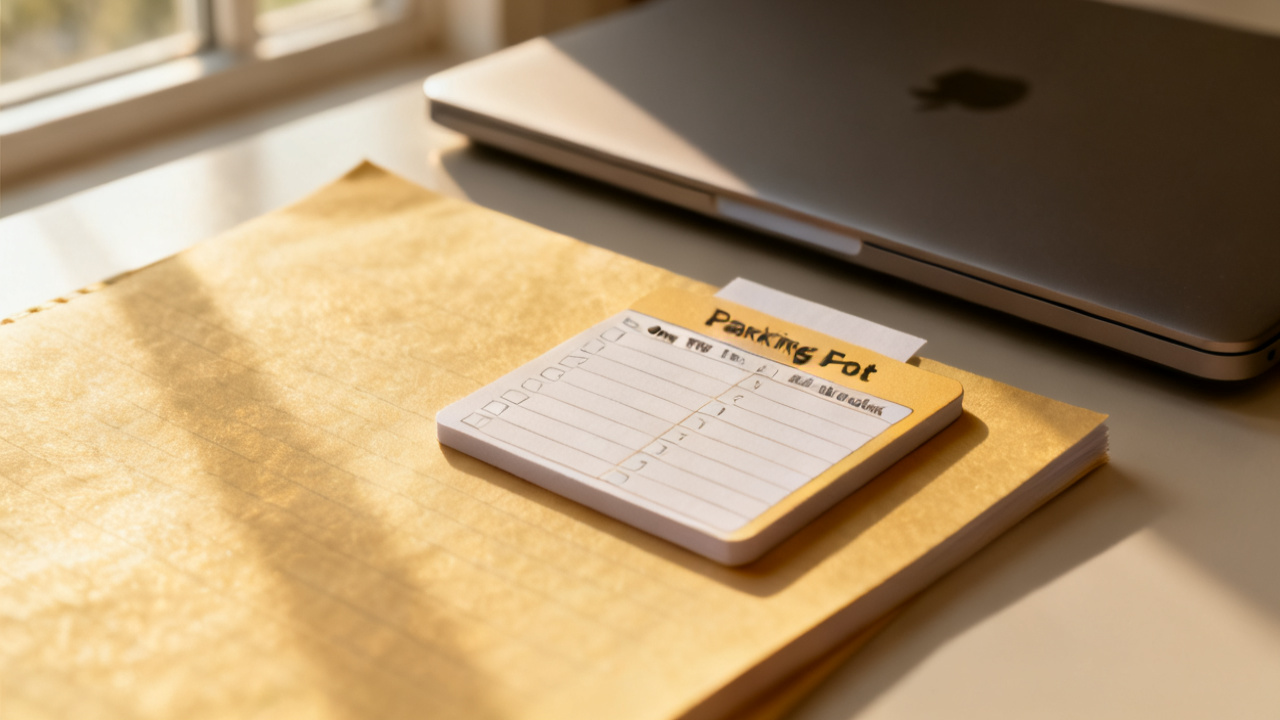
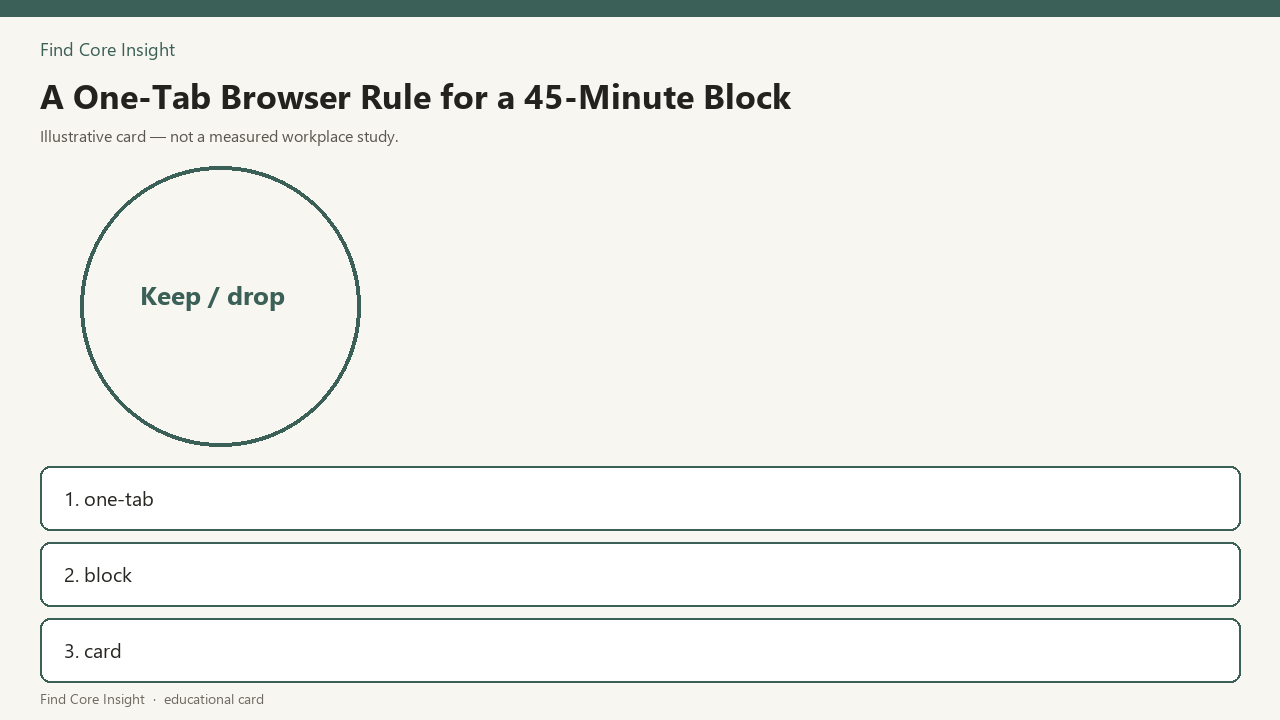
The core of this rule is simple: for any 45-minute focused work block, you only keep a single browser tab open, dedicated exclusively to the core task you are completing. Any stray thought, fact check request, or link you want to visit does not get opened mid-block, and instead gets added to a physical or digital parking list that lives outside your browser window. This eliminates the need to hold stray thoughts in your working memory, which would otherwise pull your focus away from your core task, and removes the temptation to open new tabs for quick checks. The free, reusable one-tab block card below is designed to make this system easy to implement, no special software required:
| Block Card Field | What to Fill In | Example Entry |
|---|---|---|
| Block Core Task | The single output you are actively building in your open tab, no secondary tasks allowed | Draft first 3 sections of Q3 customer success report |
| Pre-Vetted Allowed Sources (max 2) | Paste direct links to any fixed, required references directly into your work document so you do not need separate tabs open | https://company.internal/q2-customer-retention-stats |
| Parking List Log | Jot every stray thought, link request, or off-task idea here during the block, no exceptions | 1. Check Sarah’s Slack note on enterprise onboarding changes 2. Look up 2024 SaaS average retention benchmarks 3. Save lemon garlic salmon recipe for weekend meal prep |
| Post-Block Checkbox | Mark only once your 45-minute timer goes off, no early checks | [ ] All parking list items addressed in priority order after the block ends |
Find Core Insight tested this structure with freelance knowledge workers who listed tab clutter as one of their top three daily distraction sources, and most reported that it cut down unplanned mid-block tab switches by a significant margin. Physical cards work best for most people, as using a digital notes app can lead to accidental app switching and extra notifications, but a locked notes page on a second screen works if you prefer digital tracking.
“Just one more tab” that ends the block
The single biggest failure point for this rule is the “just one more tab” request that pops up mid-block, when you’re convinced you need to check a single fact to keep working. Even one unplanned tab opened mid-block breaks your task context and triggers the brain’s novelty reward loop, making it far harder to return to your core task quickly. Example timing: If you open one unplanned tab 10 minutes into your 45-minute block, you might spend 8 minutes skimming that tab, 5 minutes following a link from that page, and 3 minutes reorienting to your original work when you finally switch back, cutting your productive time in the block almost in half. This is why the rule is non-negotiable: no new tabs are opened mid-block, no exceptions, no matter how small the request feels. If the information is truly critical to completing your task, you will still remember it after the 45-minute timer goes off, and writing it down on your parking list takes no more than 2 seconds.
Forty-five minutes with the parking list only
To run a successful one-tab block, start by filling out your block card 2 minutes before your timer starts. Define your core task clearly, add any pre-vetted source links directly to your work document so you don’t need separate tabs open, close all other browser tabs, and mute non-critical notifications. Once you start your 45-minute timer, you only interact with your single open work tab for the full duration. Any time a thought pops up that would make you open a new tab, switch apps, or step away from your task, pause for 2 seconds to jot that thought on your parking list, then immediately return to your core task. You do not need to prioritize or sort parking list items mid-block; you only need to write them down so you don’t have to hold them in your working memory. When the timer goes off, take a 5 to 10 minute break away from your screen, then work through your parking list items in order of priority before starting your next focused block.
Design work that truly needs side-by-side windows
The one-tab default works for most knowledge work tasks, including writing, report building, email processing, and research drafting, but some work genuinely requires side-by-side references to complete efficiently. If you are designing visual assets, coding, or editing video, you may need to reference a fixed brand guide, documentation, or style sheet next to your core work window. For these tasks, you can adjust the rule to allow up to two pre-approved fixed windows, opened before your block starts, with no extra tabs in either window. Any stray ideas, like looking up a new stock photo or searching for a code snippet, still go on your parking list for after the block ends. The core of the rule remains the same: no new tabs or windows are opened mid-block, and all off-task requests are logged for later.
Print out a stack of one-tab block cards tonight to keep on your desk, and test the rule on your first focused work block tomorrow. You won’t have to waste time sorting through a dozen open tabs at the end of the block, and you’ll likely finish your core task faster than you would with a cluttered browser window, with less leftover mental fatigue from constant micro-decisions.