Cold coffee is on the third sip and the first task on the list needs a clear head you do not have yet. Your cursor hovers over the 2-hour project block you scheduled last night, and the Slack icon in the dock bounces twice, unread. You could force your way through the deep work now and be useless for the rest of the day, or you can shift the order of tasks to match how your brain actually feels right now.
The two choices you have right now
The first choice is to stick to the schedule you built when you were well-rested last week, block all notifications, and grind through the high-focus task first, even if every sentence feels like pulling teeth. The second choice is to spend 5 minutes sorting your daily tasks by how much energy they actually require, then knock out the lowest-effort work first while you wait for your focus to ramp up. Neither choice is inherently good or bad, but only one fits how you show up today. A lot of people write off sorting as something that “wastes time” when you already have a full to-do list, but that 5 minutes prevents you from wasting 2 hours on low-quality work you’ll have to redo later, plus the frustration of fighting your own brain for no reason. You don’t have to justify either pick to anyone, but you do have to pick one instead of scrolling aimlessly for the next 20 minutes while you try to “find focus” that isn’t there.
How to match the task to your current capacity
To pick between the two options, do a 10-second check right now, no overthinking. Say the first three steps of your top-priority high-focus task out loud, no notes. If you can list all three clearly, explain what each step entails, and don’t stumble over any details, you have enough baseline focus to push through the task first, as originally planned. If you blank on step two, or can’t remember the exact requirements for the final deliverable, you don’t have the headspace for deep work right now, so sorting your tasks by energy is the better call. This check works because it cuts through the guilt of “not following the schedule” and gives you a concrete, observable signal of what your brain can handle in the moment, instead of forcing you to live up to a standard you set when you felt completely different. You don’t need to do any complicated assessments, just that quick verbal check.
Fill the three energy buckets before opening chat
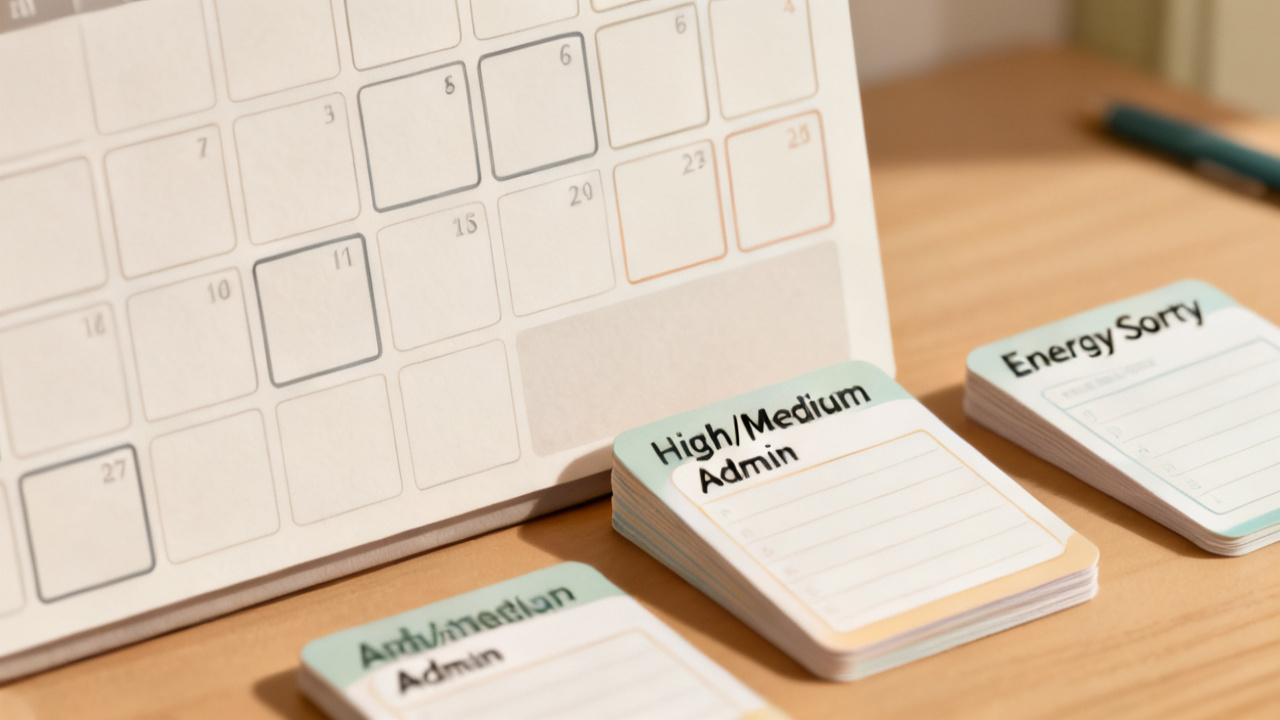
If you’ve decided to sort, you’ll use three simple buckets to categorize every task on your list for the day, no exceptions. High energy tasks are those that require 10+ minutes of uninterrupted focus to get right, no pauses for notifications. Medium energy tasks require some attention, but you can step away halfway through to grab a snack or answer a quick question and pick back up without losing your train of thought. Admin tasks are so routine you could do them half-asleep while waiting for your kettle to boil. You’ll sort every task first, assign each to a time slot that lines up with when you expect your energy to rise, then start on the admin tasks immediately, before you open any chat or email apps. The table below gives you a structure to fill out as you sort, right on this laptop’s notes app or the open notebook next to your keyboard:
| Task description | Energy bucket fit | Time slot to assign |
|---|---|---|
| Example measurement: Draft the Q3 project scope draft for cross-team review | High energy | 1:00pm – 2:45pm |
| Example measurement: Follow up with 4 vendors about delayed shipping timelines for the launch | Medium energy | 10:15am – 11:00am |
| Example measurement: Clear 3 months of unread junk emails and file completed Q2 project folders | Admin | 9:05am – 9:30am |
You don’t need to overcomplicate the slot assignments. Most people find their focus peaks 3 to 4 hours after they wake up, so slot high energy tasks for that window, medium tasks for the hour before and after that peak, and admin tasks for the first 30 minutes of the day when your brain is still warming up. Low-focus mornings that still start with the hardest task work great when you have the mental reserve to push through, but on days when you’re already foggy on your third sip of coffee, knocking out small admin wins first builds momentum without draining you before you get to the work that matters most. Once you’ve filled out the table, close your to-do list app, open your email, and knock out the admin tasks right now, no delays.
Signs your assignment was off later in the week
You won’t always get the bucket assignments right the first time, and that’s fine. The clearest sign you sorted incorrectly comes 2 to 3 days later, when you go back to the work you completed that day. If your high energy task draft is full of gaps you don’t remember making, or you missed a key detail in a medium energy follow-up that required a second, awkward email to fix, that means you assigned that task to the wrong bucket when you sorted. The fix takes less than 90 seconds: pull up the sorted list from that day, cross out the original bucket assignment, write the correct bucket next to the task, and jot one small clue you missed when you sorted, like “I blanked on the project budget requirements when I did the initial check, should have been high energy not medium”. You don’t need to redo the entire day’s schedule or beat yourself up for the mistake. Over seven mornings matching buckets to your actual energy, you’ll get faster at spotting those clues before you assign slots, no deliberate practice required.
Save your bucket template to the front of your notebook for tomorrow
Tonight, before you close your laptop and pack up your desk, flip to the first blank page of the notebook sitting next to your keyboard. Write the three bucket labels – high energy, medium energy, admin – across the top of the page, and leave three blank columns below for task descriptions, bucket fits, and time slots, just like the table you filled out today. If you want to adjust the bucket categories to fit your specific work later, you can find more flexible sorting prompts on Find Core Insight, but this basic template works for nearly any set of daily tasks. Tomorrow morning, when you sit down with your first sip of coffee, before you open any chat apps or check your email, pull up your daily to-do list and drop each task into the corresponding bucket on that pre-written page. Fill the three energy buckets before you open chat tomorrow, and you won’t spend 10 minutes staring at a high-focus task you don’t have the brain space for, fighting the urge to scroll instead of working. The only physical action you need to take right now, if you’re done sorting for today, is to jot those three bucket labels on that notebook page before you walk away from your desk.