The todo app already has 60 lines, and you still keep a second list of “things I might owe someone.” Half of those items don’t fit the standard task structure—they don’t have a clear due date, don’t map to a project, and you can’t mark them complete until someone else gets back to you first. You’ve tried adding them to your main task manager, but they clog up your priority filters and make it hard to see the time-sensitive work you can actually act on right now. This single-page open-loops note solves that gap without forcing you to adopt a new productivity tool or overhaul your existing workflow.
Open loops that clone your task manager
The items that belong on this page are the ambiguous, dependent tasks that you end up duplicating across multiple tools because they don’t fit your standard task tracking structure. These are not the work items you can complete on your own schedule, like drafting a report or updating a slide deck. Instead, they are items like following up with a coworker about the budget they promised to send, checking if a client’s approval email got stuck in their spam folder, or confirming if IT processed your software license request. When you add these to your main todo app, they sit untouched for weeks because you can’t move them forward until someone else takes action first, making your task list feel overwhelming even when you’re hitting all your core deadlines. This page is a dedicated home for these items only, so they never clutter up your high-priority task view again.
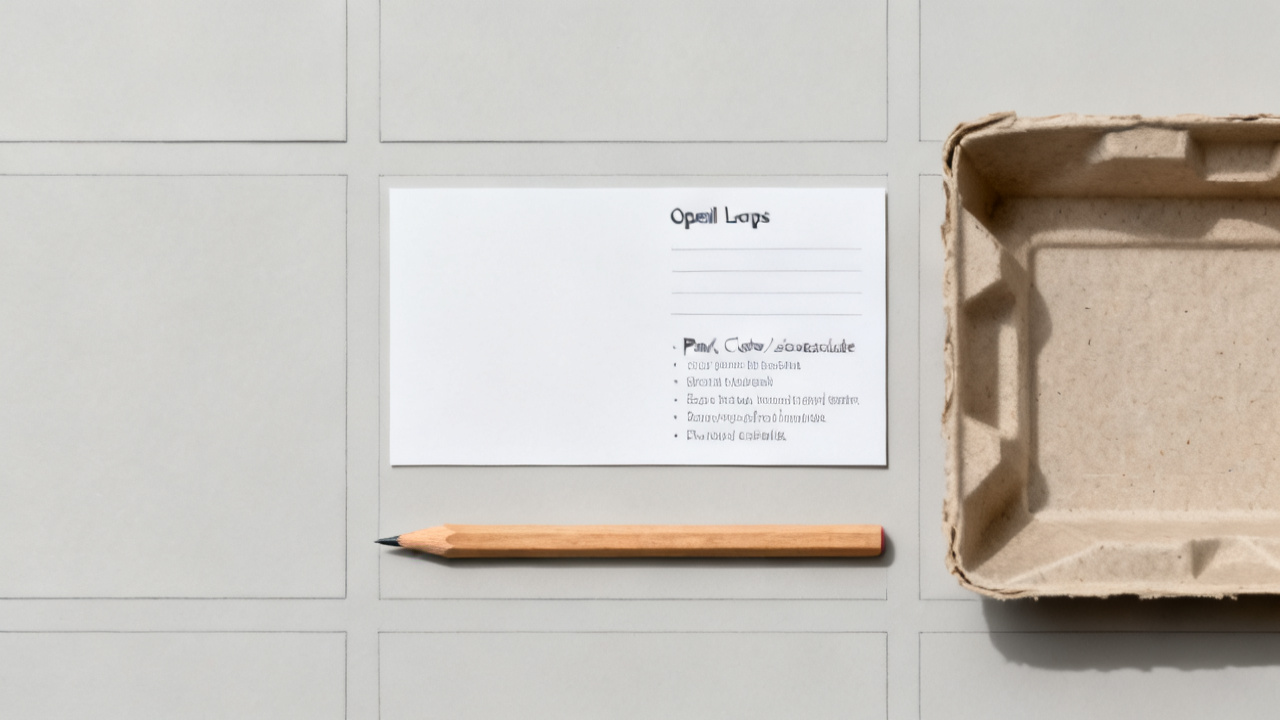
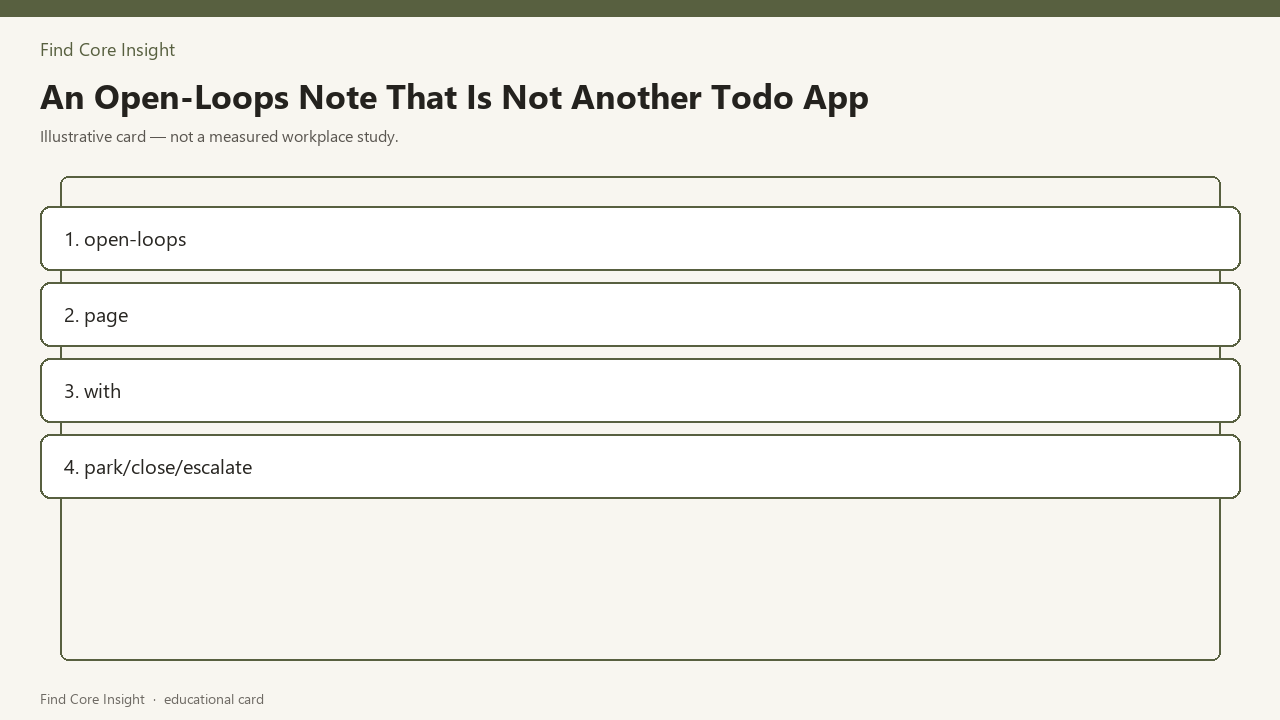
Park, close, or escalate on one page
This page operates on three simple actions for every loop, with no extra statuses, tags, or custom fields allowed. Every time you add an item, you assign it one of these three labels, no exceptions, so you never spend more than 30 seconds creating a new entry. The standard rules for each action are laid out in the table below, which you can copy directly into a note in your existing note-taking app (Notion, Apple Notes, Obsidian, or even a plain text file) to build your open-loops page in 2 minutes or less.
| Action | Eligibility Criteria | Required Note to Add | Next Review Timing |
|---|---|---|---|
| Park | You are waiting on a response from another party, no immediate action is needed from you, and the item does not block any of your upcoming scheduled work | Full name of the person you’re waiting on, date you last followed up | Next weekly sweep |
| Close | The issue is resolved, the other party confirmed no further action is needed, or the item is no longer relevant to your current scope of work | 1-sentence explanation of resolution, date closed | No further review needed |
| Escalate | The item is blocking your scheduled work, you have followed up at least twice with no response, or the delay will impact a shared team deadline | Name of the escalation contact (manager, team lead, client point person), specific impact of the delay | Next business day |
You do not need to add due dates, project labels, or priority tags to any entry. The fields listed in the table are the only required information, so you can add items on the fly between meetings or while clearing your email inbox without extra administrative work.
Loops that linger because they have no owner
The most common reason open loops drag on for weeks or months is that no one has explicitly claimed responsibility for moving them forward. For example, if you’re waiting on feedback from three different people on a shared document, it’s easy for everyone to assume someone else will follow up, so the item sits unaddressed for weeks. When you add an item to your open-loops page, you are required to name the specific owner of the next step, even if that owner is you. If you cannot name a single owner, you add a line to the note field that says “owner to be confirmed” and mark the item for escalation at your next team check-in. This eliminates the ambiguity that lets loops linger—you never have to guess who is supposed to do what next, because it’s written directly next to the entry. Illustrative example: If you have a loop for “confirm venue for Q3 offsite,” the owner would be the office operations lead, not just “the ops team,” so you know exactly who to follow up with if you don’t hear back by your next sweep.
A Wednesday sweep that stays under fifteen minutes
You only review your open-loops page once a week, on Wednesday midday, so it never becomes a distraction that pulls you away from focused work. Example timing: 12 minutes total for a list of 20 open loops, with no extensions needed for most weeks. The sweep follows a strict 3-step process to keep it fast: First, go through every parked item and confirm if you’ve received a response since your last sweep, marking items close or escalate as appropriate. Second, for any parked item where you haven’t received a response in 7 or more days, send a 1-sentence follow-up to the named owner, then update the last follow-up date on the entry. Third, delete all closed items from the page to keep it uncluttered. You don’t run this sweep on Monday (when you’re prioritizing your week’s work) or Friday (when you’re wrapping up loose ends) so it never interferes with your regular workflow. If you have a particularly high volume of open loops one week, you can extend the sweep by up to 5 minutes, but you never spend more than 20 minutes total. If you have more items than you can process in that window, mark the remaining ones for escalation to your manager to prioritize.
Company ticket queues this page should not mirror
This open-loops page is for your personal, work-related open loops only—it is not a replacement for your company’s existing formal tracking systems. You should never copy items from Jira, Asana, Zendesk, or your team’s shared task list onto this page, because those items already have a dedicated owner, status, and tracking process in place. The only items that belong on this page are the informal, unstructured loops that don’t fit into those formal systems: the quick favor you asked a coworker for last week, the feedback you’re waiting on from a peer for a personal development project, the confirmation you need from HR about your upcoming PTO request, or the follow-up with a contact you met at a recent networking event. If you find yourself adding more than 25 items to the page at any time, that’s a sign you’re adding items that belong in your company’s formal tracking systems, and you should do a quick purge to move those items where they belong. Find Core Insight editorial guidance recommends keeping this page private to avoid unnecessary administrative overhead from sharing or formatting requests from other team members.
To get started today, open a new blank note in your existing note-taking app, paste the park/close/escalate table at the top, and add 3 to 5 open loops that are currently cluttering up your main todo app. You don’t need to customize it or add any extra fields—just start using it, and adjust the weekly sweep timing only if it conflicts with your existing team schedule.
Written by the Find Core Insight editors.